{ "@context": "https://schema.org", "@type": "Article", "mainEntityOfPage": { "@type": "WebPage", "@id": "https://www.bankaust.com.au/blog/{{slug}}" }, "headline": "{{title}}", "description": "{{desc}}", "image": "{{image}}", "author": { "@type": "Organization", "name": "Bank Australia", "url": "https://www.bankaust.com.au/" }, "publisher": { "@type": "Organization", "name": "Bank Australia", "logo": { "@type": "ImageObject", "url": "https://cdn.prod.website-files.com/64d5d5beb2a67e9491ecdff8/64d5d5beb2a67e9491ece00c_BA-logo-white.webp" } }, "datePublished": "{{datePublished}}", "dateModified": "{{dateModified}}" }
No items found.
Back to blog
Impact

Karen’s building her dream family home with Bank Australia’s Clean Energy Home Loan

Photo journal

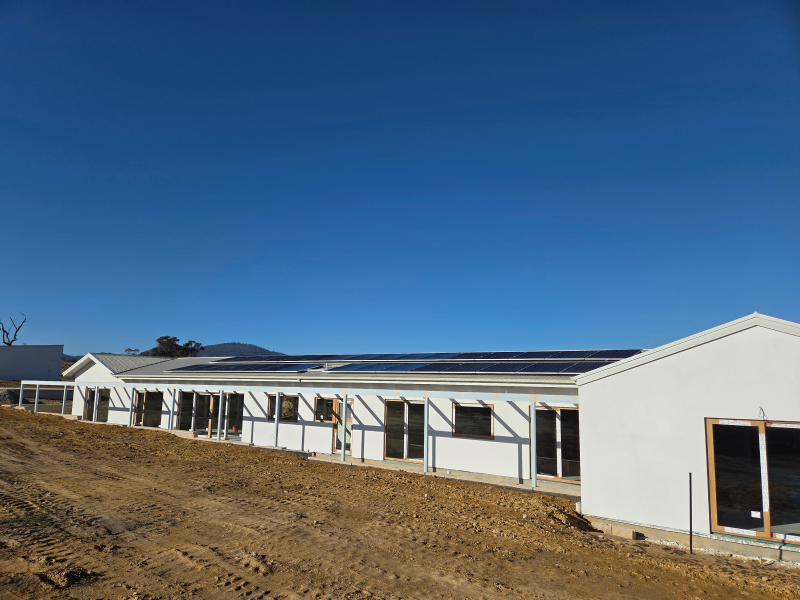
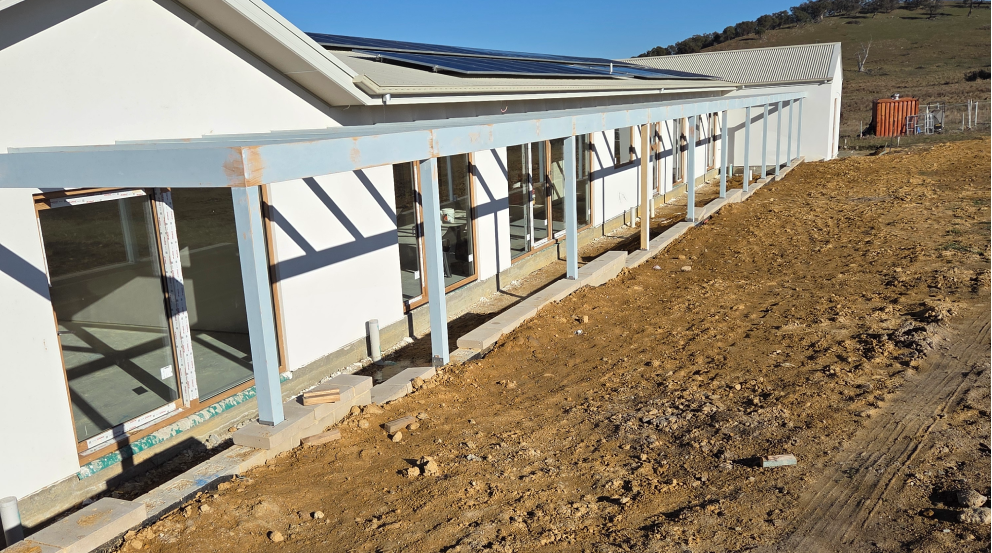
Bank Australia customer Karen is building her dream family home on Ngarigo Country, just outside Canberra. With an impressive 8.8-star energy rating, she’s using the Clean Energy Home Loan to help bring her vision to life, and she’s sharing her top tips for creating a home that’s both energy efficient and comfortable in all seasons.

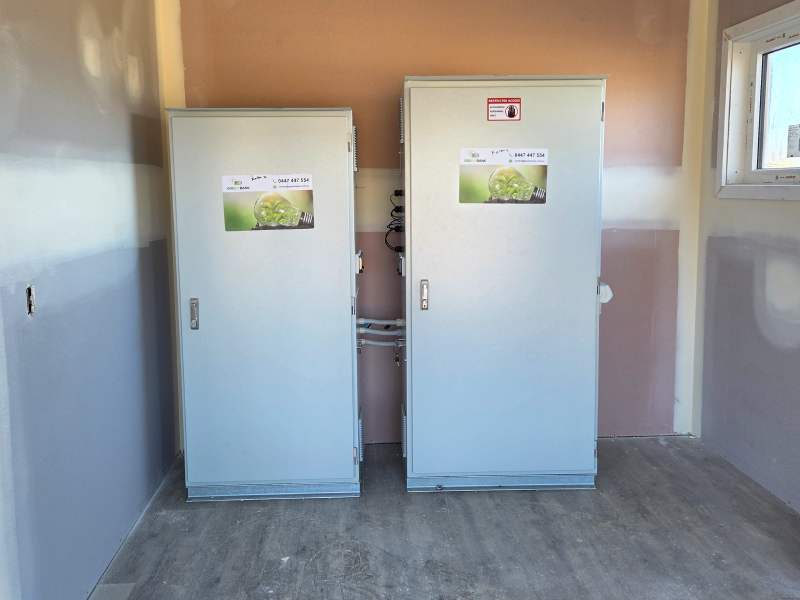
Karen’s decision for her new home to be all-electric was driven by equal parts sustainability and rising energy costs. By installing solar panels and a home battery during the build, she said “I will have no energy bills for the life of the house, the upfront investment has future-proofed our family.

Solar panels can help bring your energy bills down — and they’re a smart step toward sustainability.

Karen’s top 3 tips: sunlight, insulation and orientation

To make the most of solar energy and keep her home comfortable all year round, Karen focused on 3 main elements: orientation, insulation, and natural light.

Her home is north facing with eaves, allowing sunlight to warm the house in winter while blocking out the harsh sun in the summertime.

Orientation is everything,” she said, “facing the living areas north and making sure the summer sun is blocked out goes a long way.”

Karen, who works in the sustainable homes industry, says windows and doors are often overlooked.

“We usually insulate the walls, ceiling, and floor of our homes, but often overlook the windows and doors. To properly seal a home, we need to insulate everything, including those parts. When the whole house is sealed, it becomes much more energy efficient.”

Insulation helps block out the harsh sun and keep your house cool during summer.

A growing shift towards sustainable homes

Karen is optimistic about the future of sustainable housing in Australia.  

“Passively designed houses are becoming more accepted in Australia, and anything that uses less energy is a good thing.”  

She’s one of many Bank Australia customers choosing to build or upgrade their homes to be all-electric and more energy efficient, making them more sustainable for both people and the planet.  

When asked why she chose Bank Australia, Karen shared, “I love the integrity of Bank Australia, their values align with mine.”
Being energy efficient can help us protect people and the planet.

About the Clean Energy Home Loan

Bank Australia offers customers reduced interest rate on the Clean Energy Home Loan New Build - for newly built, all-electric homes with a NatHERS rating of 7.5 stars or higher and rooftop solar.  

Karen’s Clean Energy Home Loan is one of the green mortgage assets in Bank Australia’s Sustainability Bond eligible asset pool. These assets contribute towards the improved energy efficiency of Australia’s housing stock.

*Due to strong demand for our Clean Energy Home Loan Renovate product for existing homes, we have paused new applications since the 28th of March 2025.

Related stories

Impact

What B Corp certification actually requires of Bank Australia and what it means for customers

Every March, B Corp Month gives certified companies a moment to reflect. Bank Australia asked our Impact Integrity Manager Renzo Mori what the certification means in practice, and what it means for customers.

Impact

Customer ownership makes banks bolder, and that’s what we need right now

In an era of climate urgency, housing stress and deepening inequality, the way our banks are structured matters more than ever. Customer-owned banking removes some of the barriers to long-term, values-driven action, and it may be the model the world needs the most right now.

Impact

The ‘growler’ at Wirey Swamp: A long-awaited frog call in Victoria's changing landscape

Last spring, a ‘chorus’ of growling grass frogs were heard at a Nature Glenelg Trust restored wetland for the first time, a hopeful sign for the vulnerable Australian amphibian.

Impact

A beach cleanup won’t solve marine pollution. We did one anyway. Here’s why it mattered.

A firsthand look at Bank Australia’s beach clean‑up with Parley for the Oceans, exploring where ocean plastic really comes from, why systemic solutions matter, and how recycled‑plastic bank cards support a more sustainable future.

Impact

How switching to an ethical bank can help safeguard Australia’s ecosystems

On World Wildlife Day, we celebrate the species that make Australia extraordinary.

Impact

How Bank Australia supports people with disability

To mark International Day of People with Disability, we’re reflecting on some of the ways that Bank Australia is working to improve accessibility and inclusion across our banking, our partnerships and our impact.